By: Dr. Evan Steinke – Doctor of Chiropractic,
Active Sports Therapy – Westman Village (Calgary, AB)
Whether you took a spill over the handlebars on a bike trail, took a hard hit on the ice, or landed right on the tip of your shoulder during a weekend game, an acute shoulder injury stops you in your tracks immediately.
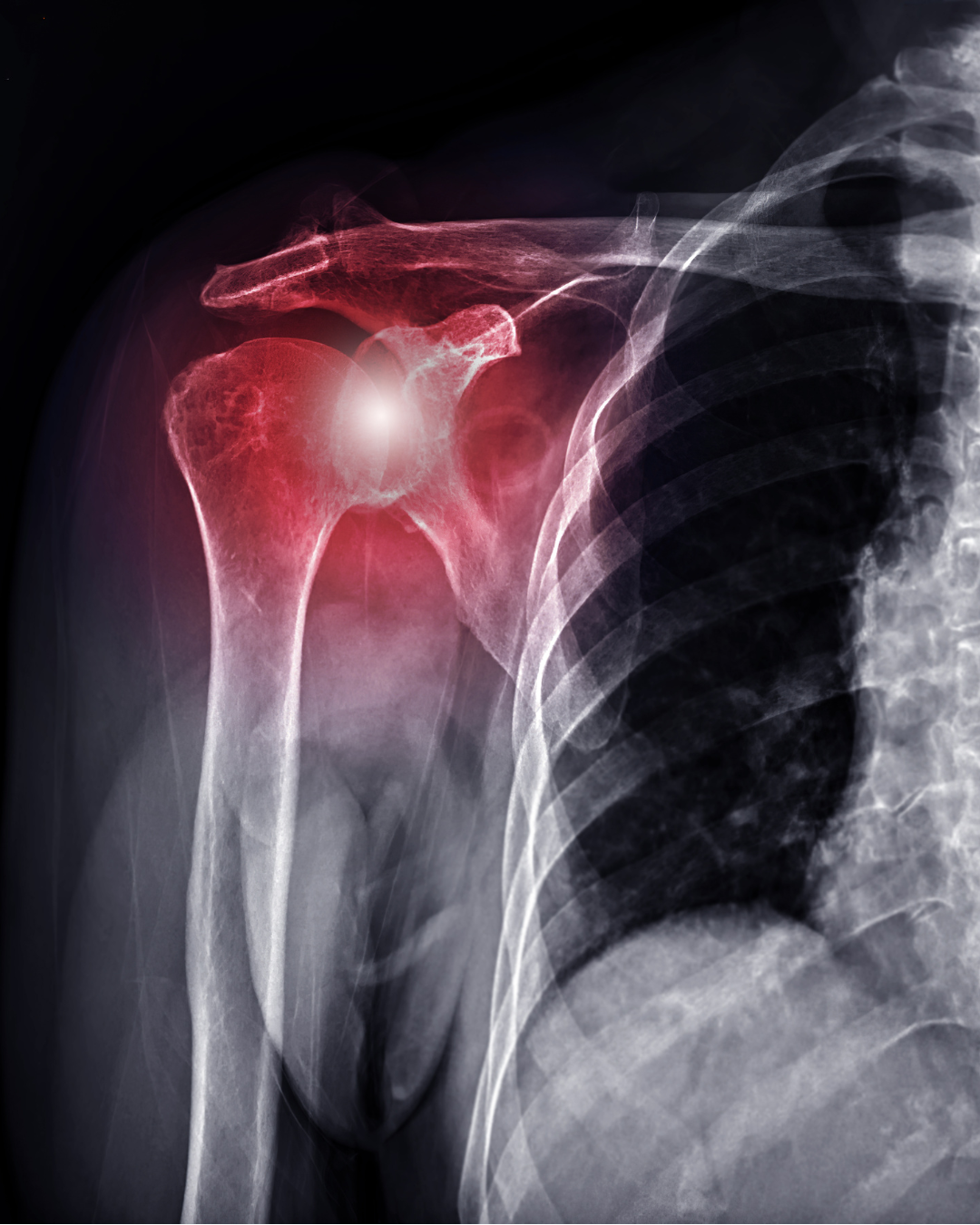
Shoulder injuries come in many shapes and sizes. One of the more dramatic injuries we see at Active Sports Therapy in Westman Village is an acromioclavicular (AC) joint separation.
A patient recently walked into our clinic with a Grade V Rockwood injury. This is a
severe shoulder separation where the ligaments completely tear and the collarbone
visibly pushes upward. Seeing an injury like this brings up a big question: what actually happens inside your body when you rupture a ligament, and what are your options for getting back to normal?
1. Understanding Your AC Joint, Ligaments, and the Rockwood Scale
What Is a Ligament?
To understand shoulder separations, it helps to know how our joints hold together:
- Tendons attach muscles to bones so you can move.
- Ligaments attach bone to bone. Think of them like tough, non-stretchy straps of duct tape that keep your joints stable and aligned.
Where Is the AC Joint?
If you slide your fingers along your collarbone toward the outside edge of your shoulder, you will feel a firm, bony bump. That is your acromioclavicular (AC) joint. This joint is where the end of your collarbone (clavicle) meets the top point of your shoulder blade (acromion). Unlike your ball-and-socket shoulder joint, the AC joint is fairly rigid—it doesn’t swing around, but it absorbs huge amounts of stress when you push, pull, or fall.
Two main sets of ligaments secure this joint:
- The AC Ligament: Keeps the collarbone from sliding front to back.
- The Coracoclavicular (CC) Ligaments: Two strong bands that hold the
collarbone down close to the shoulder blade.
How Severe Is the Tear? The Rockwood Scale
Doctors use the Rockwood Classification System to grade how badly these ligaments are stretched or torn:
- Grade I: A mild sprain of the AC ligament. The CC ligaments remain intact.
- Grade II: Complete tear of the AC ligament and a partial tear of the CC ligaments
- Grade III: Complete rupture of both the AC and CC ligaments. The collarbone is mildly displaced upwards
- Grade IV: All ligaments ruptured and the collarbone is pushed backwards.
- Grade V: All ligaments ruptured and the collarbone is displaced significantly upwards leaving a raised lump above the shoulder.
- Grade VI: All ligaments are ruptured and the collarbone is displaced downwards.
2. What Happens When You Rupture a Ligament?
When a ligament suffers a complete tear (rupture), the joint loses its built-in safety strap. From the moment it happens, your body kicks off a three-step healing process:
Step 1: The Inflammatory Phase (Days 0–5)
Right after the tear, your body sends extra blood and repair cells straight to the shoulder. This causes fast swelling, heat, throbbing pain, and muscle spasms as your body tries to freeze the joint in place to protect it from further injury.
Step 2: The Repair Phase (Weeks 1–12+)
Your body begins building new scar tissue (collagen) to patch the tear. In mild sprains, the torn ends sit close together and can mend well. However, in higher grades like a Grade V tear where the collarbone is pulled far out of position, the ligament ends can be too far apart to reattach on their own without surgery.
Step 3: The Muscle Takeover (The Neuromuscular Shift)
Because the joint lost its passive ligament straps, the surrounding muscles must step up and work much harder. They take over the job of holding your shoulder blade steady and guiding your arm through everyday movements.
3. What Can You Do About It? Treatment & Recovery Options
Treatment depends on the severity of the tear, your job, and your athletic goals.
Conservative Care for Lower Grades (Grades I–III)
For mild to moderate sprains, surgery is rarely necessary. Treatments like chiropractic care, guided rehab exercises, soft tissue therapy, and laser therapy help manage swelling, restore shoulder blade mechanics, and strengthen stabilizing muscles. Most people get back to work, golf, hockey, or the gym within a few weeks.
Treating Severe Tears (Grades IV–VI)
In the past, severe separations (grade 4-6) were almost always sent straight into surgery to bolt or anchor the collarbone back down. However, recently there has been increasing support to also treat these more severe injuries conservatively. While a non- surgical approach may leave a permanent, harmless bump on top of your shoulder, recent studies show that focused strength training and rehab can provide similar pain relief, strength, and range of motion compared to surgery.
If severe pain, nerve symptoms, or functional limitations persist after rehab, surgical options remain available.
Suspect a Shoulder or Ligament Injury? We Can Help
If you took a hard fall or notice a new bump on top of your shoulder, getting an accurate assessment early makes all the difference in your recovery.
At Active Sports Therapy – Westman Village, we assess your shoulder movement, order imaging if needed, and build an individualized rehabilitation plan to help you heal quickly and safely.
Have questions about a shoulder injury?
Book an appointment with Dr. Evan Steinke at our Westman Village clinic in SE Calgary today.